



Space Designed for Every Occasion
Packing for a family road trip, loading a stroller after school pickup, or fitting airport luggage behind a full cabin can quickly turn cargo room into the deciding factor of which vehicle to go with. For shoppers comparing full-size luxury SUVs, understanding Lincoln Navigator cargo space helps make sense of what the standard model and the Lincoln Navigator L can actually carry in daily use.
This guide breaks down published specifications, interior dimensions, and real-world cargo room so you can judge more than one headline number. You will see how row position, seating options, loading convenience, and wheelbase all affect trunk size, luggage capacity, and overall usability. Keep reading to learn more about the Lincoln Navigator cargo space dimensions and visit Boulevard Lincoln to explore our selection of the latest Lincoln Navigator models.
What Drivers Need to Know About Cargo Room
The Lincoln Navigator is built to offer generous passenger comfort and strong cargo versatility, but the useful answer depends on how the seats are arranged. A family using the third row every day will care most about cargo room behind the third row, while a buyer hauling larger items may focus on cargo room behind the second row or maximum cargo capacity.
That is why a smart cargo breakdown looks at more than one figure. It should also consider loading height, tailgate opening, fold-flat seats, and whether the standard wheelbase or long wheelbase layout better matches your weekly routine.
Lincoln Navigator Cargo Space at a Glance
For the standard Lincoln Navigator, published specifications commonly list about 21.6 cu.ft. behind the third row and about 60.8 cu.ft. behind the second row. The Lincoln Navigator L is the larger choice for buyers who need more room with passengers still on board. It offers about 37.4 cu.ft. behind the third row, about 84.5 cu.ft. behind the second row, and up to roughly 121.6cu.ft. of maximum cargo capacity depending on configuration.

Standard Lincoln Navigator Cargo Measurements
The standard-wheelbase Lincoln Navigator measures about 210 inches in overall length, 94.6 inches in width with mirrors extended, and 78 inches in height. Those numbers help explain why it feels substantial inside while still being a bit easier to place in garages, parking decks, and tighter shopping-center spaces. For many drivers, that balance is the appeal. You still get a large, luxury SUV with ample cargo space and rear passenger room, but with slightly better maneuverability and easier parking than the longer version.
Lincoln Navigator L Cargo Measurements
The long-wheelbase Lincoln Navigator L stretches to about 221.9 in. overall while keeping the same 94.6-in. width and 78.0-in. height. That added length is the main reason it delivers more cargo room behind the third row. In practice, the extra body length gives the rear cargo area more depth without forcing you to fold seats as often. That can be a major advantage for larger families, frequent travelers, or anyone carrying gear with all rows in use.
How to Measure Cargo Space the Right Way
The best way to compare cargo volume is to start with seat position, not the biggest number in the model specifications. Behind the third row matters most for family use, behind the second row is often the practical benchmark for larger hauls, and maximum cargo capacity only matters if you regularly fold most of the cabin. It also helps to picture the actual items you carry. Suitcases, pet crates, sports gear, warehouse-store purchases, and folding chairs use space very differently, so real-world cargo room should guide your decision more than a single cargo test headline.
Behind the Third Row
For families who regularly carry six to eight passengers, this is the most important measurement. It tells you how much trunk size remains when the SUV is being used as intended, not as a two-row hauler. The standard Lincoln Navigator’s 21.6 cu.ft. is useful for groceries, backpacks, and some luggage. The Lincoln Navigator L’s roughly 37.4 cu.ft. gives you more breathing room for airport pickups, sports equipment, and everyday family travel without sacrificing seating.
Behind the Second Row
This measurement becomes the practical sweet spot for many owners. Once the third row is folded, both body styles open a much more flexible cargo area for weekend trips, shopping runs, and bulky gear. The standard model’s roughly 60.8 cu.ft. is already substantial. The Lincoln Navigator L pushes that figure to about 84.5 cu.ft., which can make a noticeable difference when packing coolers, larger suitcases, or longer cargo.
Lincoln Navigator vs. Lincoln Navigator L: Which One Fits Your Life Better
The choice between the standard Lincoln Navigator and the Lincoln Navigator L often comes down to routine, not luxury. Both deliver premium cabin materials, strong powertrain performance, advanced technology, and the polished character buyers expect from a Lincoln full-size SUV. That means cargo needs often become the deciding factor. If your life involves city parking, tighter garages, and moderate loads, the standard model may feel easier to live with, while the Lincoln Navigator L is often the better fit for maximum family-hauling flexibility.
Choose the Standard Lincoln Navigator If:
The standard model makes sense if you want strong cargo versatility with slightly easier maneuverability. It is well-suited to errands, school drop-offs, moderate luggage, and occasional road trips where you do not always need every inch of rear storage. It can also be the more comfortable option for buyers who value ease of parking. If your garage, office lot, or neighborhood streets are tighter, the shorter overall length can feel less demanding day to day.
Choose the Lincoln Navigator L If:
The Lincoln Navigator L is the stronger match if you regularly travel with all rows occupied and still need meaningful luggage capacity. Its added length is especially helpful for larger families, long vacations, airport runs, and bulky gear that would otherwise force compromises. For many shoppers, that extra room behind the third row is the whole point. You keep the premium Lincoln experience while gaining greater flexibility to meet real cargo demands every week.
Real-World Cargo Uses and Packing Scenarios
Specifications are helpful, but ownership usually comes down to common routines. A useful interior review should connect cargo dimensions to the way people actually pack, load, and travel. That means thinking about family vacations, youth sports, grocery runs, airport pickups, and home projects. These are the situations where the difference between the standard body and the long wheelbase model becomes easy to feel.
Family Travel and Daily Errands
On a normal weekday, third-row cargo space affects where the stroller goes, whether backpacks fit neatly, and how many grocery bags can stay upright. Carry-on luggage and diaper bags also compete for the same area, especially when every seat is occupied. The Lincoln Navigator’s flexible seating options help it adapt quickly. A cabin configured with captain’s chairs or a bench can move from school duty to weekend travel with less hassle than many shoppers expect.
Road Trips and Large Loads
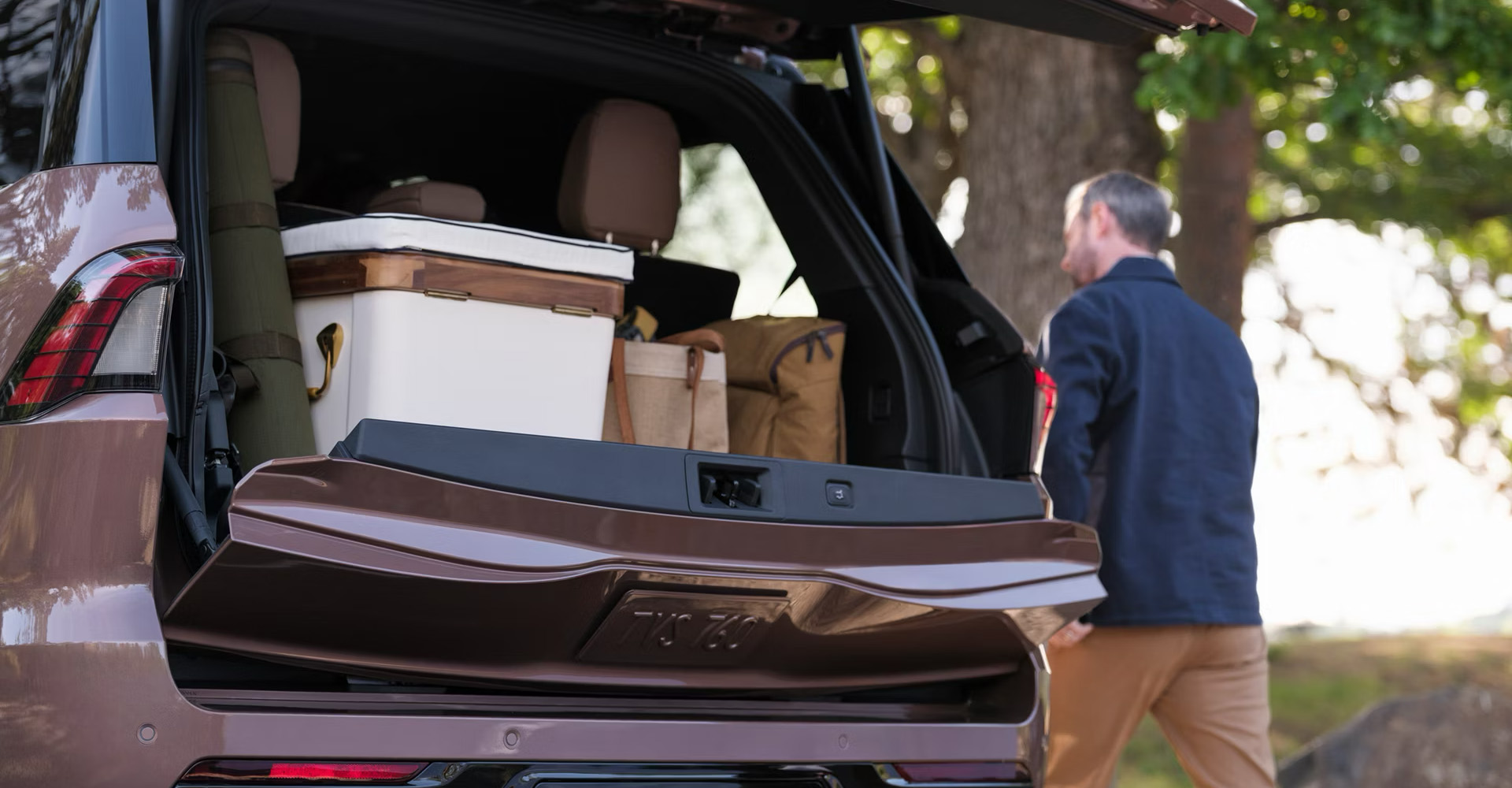
For longer drives, folding rear seats creates a more open and useful rear cargo area. That added space can support larger suitcases, coolers, folding chairs, sports bags, and recreational gear with much less stacking pressure. The Lincoln Navigator L is especially attractive for drivers who do not want to choose between passengers and cargo. On a family road trip, that extra depth behind the third row can reduce the need to pile items too high or block visibility.
Interior Features That Make Cargo Space More Useful
Cargo usefulness is not only about volume. Features that simplify loading, unloading, and changing layouts can make the Lincoln Navigator interior feel much more practical in daily ownership. This is where the Lincoln Navigator blends luxury with utility. Premium design, advanced cabin technology, and thoughtful storage flexibility help the SUV feel refined without sacrificing everyday functionality.
Power-Folding Seating and Flexible Layouts
The available PowerFold setup makes changing the cabin quick and low effort. Depending on the configuration, shoppers may find a class-exclusive 40/20/40 bench, available dual captain’s chairs, and a power-reclining third row that balances comfort and cargo versatility. These seating options matter because they reduce friction. When the second- and third-row areas can be adjusted quickly, the SUV becomes easier to use for passengers one day and for larger cargo the next.
Loading Convenience Features
A power liftgate helps when your hands are full of shopping bags, sports gear, or travel items. Available features such as the Lincoln Split Gate can also improve access and make loading feel more controlled in tighter spaces. These details are easy to appreciate in real ownership. Lower-effort access, better tailgate opening usability, and simpler loading can matter just as much as raw cargo volume when life gets busy.
Common Mistakes Shoppers Make When Evaluating Cargo Space
One of the most common mistakes is focusing only on maximum cargo capacity with all rear seats folded. That number can be useful, but it does not reflect how many families actually use a three-row SUV during the week. Another mistake is ignoring practical details such as loading height, tailgate opening, and ease of parking. A vehicle that looks larger on paper may not always feel easier to load or live with every day.
Overlooking Daily Driving Trade-Offs
The Lincoln Navigator L offers more room, but that added length can affect maneuverability in garages and crowded parking lots. Some drivers will gladly accept that trade-off, while others will prefer the standard model’s easier fit. This is where honest self-assessment helps. Think about your driveway, commute, and parking routine before assuming the largest option is automatically the right one.
Find the Right Fit at Boulevard Lincoln
The best Lincoln Navigator is rarely the one with the biggest number alone. It is the one that fits your passengers, luggage, daily parking reality, and long-term expectations with the least compromise. That is why cargo planning deserves a close look before you buy. The Lincoln Navigator combines luxury, technology, and utility with unusual confidence, and choosing the right version starts with understanding how that space will serve you in real life.
FAQs
How big is the trunk of the Lincoln Navigator?
The standard Lincoln Navigator offers about 21.6 cu.ft. of cargo room behind the third row. The Lincoln Navigator L increases that to about 37.4 cu.ft. behind the third row.
Is a Lincoln Navigator bigger than a Chevy Suburban?
It depends on the measurement you are comparing. The Chevrolet Suburban is often discussed for overall size and utility, while the Lincoln Navigator emphasizes full-size luxury, passenger comfort, and cargo versatility.
Can the seats fold down for more cargo space?
Yes, the Lincoln Navigator offers power-folding seating that quickly expands the cargo area. Features such as PowerFold and fold-flat versatility make it easier to switch between passenger seating and storage.
Is the cargo area easy to access?
Yes, the Lincoln Navigator includes a power liftgate, and some models offer added convenience features for easier loading. These features help when handling heavy bags, children’s gear, or daily errands.
SHOP NOW
Connect with us

